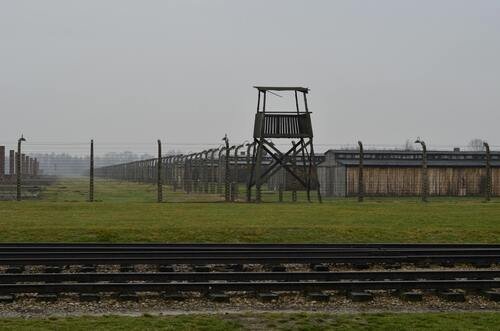
Visiting Auschwitz-Birkenau changes you – not in an abstract way, but in a deeply personal one that follows you back to your desk and into every professional decision you make afterward. What does a concentration camp teach professionals about complicity, moral courage, and the ethical weight of everyday choices? If you have ever asked yourself “Am I doing enough?” at work, this reflection will give that question a new and urgent dimension.
The Unexpected Professional Lesson Hidden in a Historical Site
I didn’t expect a visit to a concentration camp to become one of the most formative experiences of my professional life. I arranged the trip through KrakowDirect, a Krakow-based transport and tour service, after spending a few days in the city. The logistics were straightforward. The experience was anything but.
Walking through the administrative blocks at Auschwitz I, I didn’t only see a monument to suffering. I saw offices. Filing cabinets. Typewriters. Ledgers filled with names reduced to numbers. I saw the infrastructure of a bureaucracy – one staffed by engineers, lawyers, clerks, and administrators who came to work each morning, followed procedures, and went home at night. That image has never left me.
Ordinary Professionals, Extraordinary Harm
One of the most disturbing revelations at Auschwitz is how ordinary the perpetrators often were. Historians like Christopher Browning, in his landmark study Ordinary Men (1992), documented how regular middle-aged professionals – not fanatics – carried out mass murder when placed within authoritarian organizational structures.
Engineers designed the crematoria. Lawyers drafted the racial laws. Logistics specialists managed the train schedules. Each operated within their professional lane, rarely confronting the full picture of what their work enabled.
This is the machinery of atrocity: not a single monster, but thousands of professionals doing their jobs.
Hannah Arendt coined the phrase “the banality of evil” after observing the trial of Adolf Eichmann in 1961. Eichmann claimed repeatedly that he was simply following orders. Arendt’s insight was chilling: evil on a massive scale doesn’t always require malicious intent – it requires compliance, routine, and the abdication of individual moral judgment.
This logic appears in modern corporate scandals too: the 2008 financial crisis, the Volkswagen emissions scandal, the opioid crisis. In each case, individuals justified their actions through professional role identity: “I’m just doing my job.” Auschwitz forces you to confront where that logic ends.
The Question You Cannot Escape
Standing in the former administrative compound, I asked myself the question I had been avoiding: Would I have spoken up?
Most of us believe we would. Research suggests otherwise. Stanley Milgram’s obedience experiments at Yale University demonstrated that approximately 65% of ordinary people will administer what they believe to be dangerous electric shocks when an authority figure instructs them to do so. Organizational pressure amplifies this tendency dramatically.
That discomfort – the honest recognition that I might have stayed silent – became the most valuable professional development moment of my career.
From Rule-Following to Values-Driven Decision Making
Professional codes of conduct matter. Compliance frameworks matter. But Auschwitz is a reminder that laws and procedures can serve evil ends. Every atrocity in the Holocaust was, at some level, legally authorized within its own twisted framework.
Genuine professional responsibility cannot stop at compliance. It requires:
- A personal moral framework that operates independently of institutional permission
- The habit of asking “Who is harmed by this decision?” – not just “Is this allowed?”
- The willingness to name ethical concerns even when the system discourages it
History gives us examples of those who chose differently. Oskar Schindler used his position to protect over 1,200 Jewish workers. Aristides de Sousa Mendes issued thousands of visas against direct orders from his government. In modern contexts, whistleblowers like Frances Haugen and Sherron Watkins faced serious consequences for speaking out. Moral courage is rarely comfortable. But silence in the face of wrongdoing carries its own devastating cost – one that compounds over time.
Memory as a Tool for Professional Development
Engaging with difficult history builds ethical reasoning skills that abstract training cannot replicate. Holocaust education integrates into leadership development programs at universities and corporations worldwide. Visiting a site like Auschwitz-Birkenau does something a compliance seminar cannot: it makes the stakes visceral and human. It transforms ethics from a theoretical exercise into a lived moral commitment.
If you plan such a visit, https://benimarco.es/trip-to-auschwitz-from-krakow/ offers practical guidance on organizing a trip from Krakow, including what to expect and how to prepare emotionally and logistically for one of the world’s most important sites of memory.
Practical Steps Toward a More Conscientious Professional Life
Ethical awareness is a muscle – it needs regular exercise. Start with these habits:
- Ask the impact question daily: Before finalizing a decision, ask – Who is affected by this, and how?
- Create personal accountability checkpoints: Review your decisions monthly with fresh eyes.
- Invite ethical dialogue in your team: Normalize the phrase “I have a concern about this” – make it safe to say out loud.
You don’t need organizational permission to begin any of these. Start today.
If you lead a team, push further: advocate for strong whistleblower protections, build diverse teams to reduce groupthink, and treat ethics education as an ongoing career requirement – not a one-time onboarding checkbox.
Carrying Auschwitz Forward
The visit fades in its immediacy over time. The images – the mountains of shoes, the administrative files, the scale of deliberate human erasure – soften at the edges. But the question it planted does not fade: What am I willing to do, and what am I willing to say, when it matters?
The greatest tribute professionals can pay to the victims of the Holocaust is not silence or sentiment. It is ethical vigilance, applied daily, in the ordinary decisions of working life. The mechanics of complicity are not unique to the 1940s – they live in every hierarchy and every moment when a professional decides it is easier not to speak.
Seek out uncomfortable historical truths. Let them challenge you. Bring that discomfort into your workplace as a tool for better decision-making. The lessons of Auschwitz belong to every person who holds professional power over others, however small that power may seem.