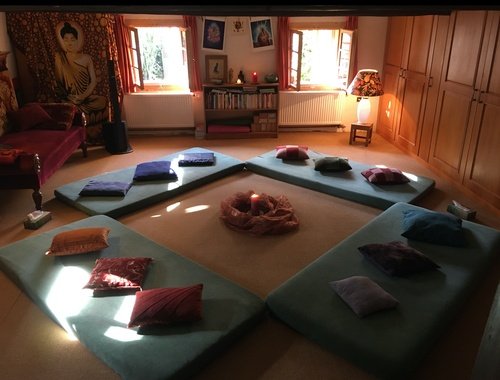
In recent years, more people have begun exploring practices that support personal growth, emotional well being and deeper self understanding. Traditional approaches such as meditation, mindfulness and yoga continue to attract interest, yet many individuals are also discovering methods that engage the mind and body in more immersive ways. One of the most discussed approaches in this field is Holotropic Breathwork.
As awareness of this practice grows, many people search online for answers to a simple but important question: what is holotropic breathwork? The answer is both straightforward and surprisingly profound.
Holotropic Breathwork is a method of self exploration that combines intensified breathing, evocative music, focused body awareness and supportive facilitation. Developed by Stanislav Grof and Christina Grof, it was designed as a way to access non ordinary states of consciousness without the use of psychedelic substances.
For many participants, the process becomes a journey into unexplored aspects of their inner world.
The origins of Holotropic Breathwork
To understand what is holotropic breathwork, it helps to look at its origins.
Stanislav Grof spent decades researching consciousness, psychology and transformative experiences. His work led him to explore how altered states of awareness can contribute to healing, insight and personal growth.
Following restrictions on psychedelic research, Grof and Christina Grof sought a legal and accessible way to facilitate similar exploratory experiences. Their efforts eventually led to the development of Holotropic Breathwork.
Since then, the method has spread internationally and continues to be practiced through workshops, training programs and personal development retreats.
The central idea remains the same. Human beings possess an innate capacity for healing and transformation when provided with appropriate conditions for self exploration.
What happens during the breathing process
Many people assume that breathing is simply a biological function. In reality, breathing influences emotional states, physical sensations and mental focus more than most individuals realize.
During a Holotropic Breathwork session, participants engage in a pattern of deeper and faster breathing than they normally use in everyday life.
This conscious breathing is accompanied by carefully selected music that evolves throughout the session.
The experience often unfolds in unique ways for each participant. Some individuals encounter powerful emotions. Others experience vivid imagery, symbolic themes or meaningful personal insights.
There is no predetermined outcome.
Instead, participants are encouraged to trust the process and allow their experience to unfold naturally.
The importance of setting and facilitation
One reason Holotropic Breathwork differs from casual breathing exercises is the emphasis placed on preparation and support.
A professionally facilitated workshop usually includes:
• Orientation and preparation
• Safety information
• Breathing sessions
• Emotional and practical support
• Creative integration activities
• Group sharing opportunities
Facilitators help create an environment where participants feel safe enough to explore their inner experiences without unnecessary distractions.
This supportive framework is considered an essential component of the process.
What is holotropic breathwork from a psychological perspective
From a psychological viewpoint, Holotropic Breathwork can be understood as an experiential approach to self discovery.
Many aspects of everyday life are influenced by unconscious patterns, unresolved emotions and deeply rooted beliefs. These influences often operate outside conscious awareness.
Through non ordinary states of consciousness, participants may gain access to material that is not readily available through ordinary thinking.
Some individuals describe the experience as gaining a broader perspective on their lives.
Others report a stronger connection to emotions they had previously ignored or suppressed.
While experiences vary greatly, many participants leave with a greater sense of clarity and self awareness.
Physical sensations during a session
People interested in what is holotropic breathwork often wonder what they might physically experience.
Physical sensations can differ from one person to another.
Common experiences may include:
• Changes in body temperature
• Tingling sensations
• Feelings of energy moving through the body
• Emotional release
• Deep relaxation
• Increased body awareness
These sensations are generally considered part of the natural process of exploration.
Participants are encouraged to remain open to whatever arises rather than attempting to control or analyze every moment.
The role of music and sound
Music serves as far more than simple background accompaniment.
Carefully chosen musical sequences help shape the atmosphere of the session and support different stages of the experience.
Energetic compositions may encourage deeper engagement, while slower and more reflective pieces often support integration and emotional processing.
Many participants report that music helps them access emotions and insights that words alone cannot easily reach.
Combined with conscious breathing, it becomes a powerful catalyst for inner exploration.
Exploring holotropic breathwork how-to
Interest in holotropic breathwork how-to continues to grow as more people learn about the method.
The phrase holotropic breathwork how-to usually reflects a desire to understand the practical aspects of participation.
However, experienced practitioners emphasize that Holotropic Breathwork was developed as a facilitated process rather than a simple breathing technique that can be fully understood through written instructions alone.
The method includes preparation, support, safety considerations and post session integration.
For this reason, many people choose to attend workshops led by trained facilitators who can provide guidance throughout the experience.
Learning holotropic breathwork how-to within an appropriate setting helps participants gain a deeper understanding of both the practice and themselves.
Who can benefit from Holotropic Breathwork
Participants come from a wide variety of backgrounds.
Workshops often include:
• Professionals seeking balance
• Therapists and coaches
• Artists and musicians
• Students
• Entrepreneurs
• Individuals exploring spirituality
• People interested in personal development
Despite their differences, participants are often united by a desire to better understand themselves and their place in the world.
Many are searching for something beyond intellectual knowledge.
They are looking for direct experience.
Integration after the session
One of the most important parts of Holotropic Breathwork occurs after the breathing itself has ended.
Integration helps participants reflect on their experiences and consider how new insights may apply to daily life.
Common integration activities include:
• Journaling
• Drawing mandalas
• Group discussion
• Personal reflection
• Conversations with facilitators
Without integration, valuable insights can sometimes remain abstract.
With integration, experiences may become meaningful sources of personal growth.
Why interest continues to expand worldwide
In today’s fast paced world, many people feel disconnected from themselves despite being constantly connected to technology.
Practices that encourage genuine introspection are becoming increasingly valuable.
When people ask what is holotropic breathwork, they are often searching for more than a definition. They are searching for a pathway toward deeper understanding, emotional authenticity and personal transformation.
Holotropic Breathwork continues to attract attention because it offers an opportunity to explore consciousness in a direct and experiential way.
For many participants, that opportunity becomes one of the most meaningful experiences of their personal growth journey.
FAQ
What is holotropic breathwork?
It is a facilitated practice that combines conscious breathing, music and supportive guidance to encourage self exploration.
Who developed Holotropic Breathwork?
The method was created by Stanislav Grof and Christina Grof.
Why do people participate in Holotropic Breathwork workshops?
People often seek personal growth, emotional insight, self discovery and spiritual exploration.
What does a typical session include?
A session usually includes preparation, breathing, music, facilitation and integration activities.
What is meant by holotropic breathwork how-to?
It generally refers to learning how the process is structured and how participants engage with the practice.
Is every Holotropic Breathwork experience the same?
No. Each participant may have unique experiences, insights and emotional responses.
Why is integration important after a session?
Integration helps participants understand and apply their experiences in meaningful ways.
To learn more about Holotropic Breathwork, workshops and transformational personal development experiences, visit https://holotropicbohemia.eu/.