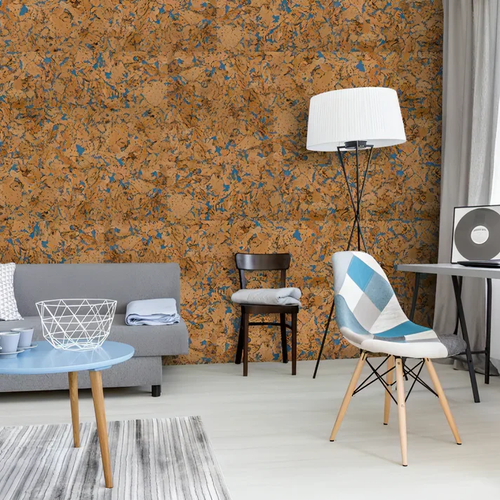
More and more people pay attention not only to how their interiors look, but also to how the space affects the body — whether it feels warm, supports relaxation, or avoids that dry, stuffy sensation. In this context, cork products — including those offered by https://corksystem.co.uk/ — gain an entirely new meaning. Cork is not just a decorative or acoustic material. It has a real impact on the microclimate of the home, which in turn influences daily well-being, energy levels and overall comfort.
Natural regulation of temperature and humidity
Cork has the ability to absorb and release moisture naturally. This helps maintain a more stable indoor microclimate, especially in homes where air tends to become too dry in winter and too humid in summer. Its cellular structure works like a gentle buffer, allowing the interior to “breathe” at a calmer rhythm. Many users only realise this benefit after some time, noticing that rooms finished with cork simply feel easier to live in.
Why cork feels warm even without heating
When you touch cork, you may get the impression that the material is warm on its own — and it’s not an illusion. Cork has very low thermal conductivity, which means it doesn’t transfer cold and doesn’t draw heat away from your hands or feet. Surfaces finished with cork are noticeably more pleasant than traditional panels, tiles or concrete. As a result, interiors appear cosier throughout the year, and temperature fluctuations are less noticeable for the household.
No toxins and cleaner indoor air
Cork does not emit volatile chemicals, doesn’t shed dust and doesn’t accumulate as much dirt as many synthetic materials. Its antistatic surface prevents particles from sticking, which is a huge advantage in rooms where hygiene and air quality matter — such as bedrooms, children’s rooms or home offices. Additionally, cork is naturally resistant to mould and mildew, which further supports a healthy indoor environment.
Improved acoustic comfort
Microclimate isn’t only about temperature and humidity — acoustics play a role as well. Cork absorbs part of the sound and reduces echo, making a room calmer and less tiring for the senses. This effect is especially noticeable in interiors with many hard surfaces: conversations sound more natural, music becomes less sharp, and everyday noises are less intrusive. Cork supports a healthy rhythm of living at home, enhances the feeling of warmth and helps create a space where you simply breathe and unwind more easily.
Why is it worth soundproofing your home at all?
Excess noise is something many of us have simply learned to tolerate, even though we often underestimate how strongly it affects our well-being. Loud neighbours, street traffic, footsteps from the floor above or the constant hum of installations — all of this can be exhausting and drain your energy. Soundproofing your home isn’t a luxury; it’s a way to create a space where it’s easier to relax, concentrate and genuinely feel at ease. And what matters most: noticeable results don’t always require a major renovation.
How does acoustic cork work and where does its effectiveness come from?
Cork is made up of millions of tiny air-filled cells. These cells absorb vibrations and disperse sound rather than reflecting it back into the room. This natural structure makes cork stable and effective without the need for additional layers or chemical treatments. Even a thin layer can reduce everyday noise, while thicker boards handle more demanding conditions, such as impact sounds or echo, with ease.